Wednesday, December 11, 2019

Buying a New House? Get the Trees Inspected First!


What are you looking for in your next house? Updated flooring, spacious closets, good gutters, a reliable roof, and attractive, mature trees are common features you may be looking for.

But about those trees--have you thought about getting them inspected before signing on the dotted line? Home inspections are standard fare these days, but what about tree inspections?

Sick trees--a disaster waiting to happen!


That big, beautiful tree in the yard of your dream home might be hiding some big problems that could end up costing you thousands of dollars and a lot of pain later. A tree professional can evaluate the shrubs and trees on a property to evaluate…


  • Structural integrity
  • Dead or dying limbs
  • Diseases, infestations, fungi, rot
  • Root health


But wait, there’s more…


Even if the trees on a property are healthy now, they could still prove problematic later. Some additional questions a tree professional can answer include:

“Is this tree or shrub species native to this region?” 

If not, the plant could compete with your other landscape for nutrition and light.

“Will this shrub or tree become too big for this space?” 

As a tree or shrub matures, it could cause problems for your house, sidewalk, driveway, or other parts of your landscaping.

“Is this shrub or tree too close to the house?” 

If planted too close to the house, certain trees and shrubs can create too much shade, damage the house’s foundation, or drop large branches directly on the house.

Here’s what you can do


As you search for your next home, take some time to look at the shrubs and trees on the property. Think you’ve found your dream house? Schedule a regular home inspection. Then call Schneider Shrub & Tree Care to schedule an evaluation of the shrubs and trees on the property so that you don’t have surprises later!

Thursday, November 7, 2019

How (And Why) to Mulch Around Your Shrubs and Trees


Did you know that something as simple as mulching your shrubs and trees can promote plant health, help ward off diseases and pests, and minimize stress?

Why you should mulch

Mulch isn’t just for making your landscaping look nice. (Though it does that, too!)
Trees growing in an urban (or even suburban) environment have a much shorter life expectancy than trees growing in a natural environment. Various stress factors make urban trees more vulnerable to pests, diseases, and root damage.

Used alongside other plant health strategies, mulching around your shrubs and your trees brings these benefits:
  • Enhances root growth
  • Regulates soil temperature during hot and cold months
  • Retains moisture
  • Provides a buffer space to prevent damage from lawnmowers
  • Reduces the risk of soil compaction

How to mulch around your shrubs and trees

With all those benefits in mind, you’re probably feeling ready to go lay some mulch! But before you go overboard, here’s how to do it right:

  1. Type of mulchUse natural mulch, such as wood or bark chips. Organic matter helps condition your soil by adding nutrients and reducing soil compaction. Add some compost to the mix and your plants will be well fed!
  2. Distance from your tree“Volcano mulching,” or piling the mulch too high and too close to your tree’s trunk, can actually harm your tree instead of help it. Tree bark decay, burrowing pests, fungi, and circling roots all result from improper mulching. Keep the mulch about 4-6 inches away from the trunk of your tree or shrub.
  3. Layer it 2-4 inchesJust as mulching too close to your tree can cause harm, mulching too thinly or too thickly can cause problems, too. Keep your layer of mulch between 2-4 inches thick. This will allow your tree to absorb enough moisture but also have enough oxygen to keep the roots happy.


Care for your shrubs and trees by mulching properly. You’ll receive happy, healthy plants as a result. If you’d like to know more about mulching around your trees and shrubs or about other ways you can promote healthy plants on your property, call your local Schneider Shrub & Tree Care and we’d be happy to help you learn how to care for your plants.

Thursday, October 10, 2019

Combatting Fall Cankerworms

Though trees seem solid and resilient, trees can succumb to a number of pests. From aphids to southern pine beetles, pests can weaken trees and destroy entire gardens. Shrubs and trees in an urban environment are particularly vulnerable to pests and diseases. Perhaps one of the most underrated, yet most destructive, pests is the fall cankerworm.


What are cankerworms?

Fall cankerworms (also known as looper worms) get their name from their life cycle. Having been laid in the fall, their eggs hatch in late spring. This pest immediately starts devouring buds and young leaves, transforming trees into wooden skeletons.

Warning signs of fall cankerworms

Fall cankerworms will first start dropping onto your car, patio table, or sidewalk. If you spot green-brownish worms with stripes on their backs, watch out. These worms eat the foliage of maple, hickory, and other hardwood trees. If you notice leaves getting holes and ragged edges, then it’s possible the fall cankerworm pest has hit your trees.

How fall cankerworms can harm trees

Fall cankerworms don’t just make your trees look ugly by devouring their leaves and buds. These worms rob trees of their energy sources and vitality. Without leaves—where photosynthesis happens—trees will starve. As a result, your trees will become weak and vulnerable to disease.

How to get rid of fall cankerworms

Call the professionals if fall cankerworms have infested your trees and shrubs. Our most effective method to prevent fall cankerworm pests at Schneider Shrub and Tree Care consists in tree banding. We wrap bands covered with a sticky substance around tree trunks. The sticky bands trap moths when they’re climbing up to lay their eggs.

Aside from periodic checks to ensure the bands remain debris-free, this method costs less than using insecticide, which requires multiple applications each week.

Insect pests like fall cankerworms aren’t the only things that can pose a threat to the health of your shrubs and trees. Diseases and malnutrition can harm your shrubs and trees just as much as an army of ravenous fall cankerworms. Schneider Shrub and Tree Care offers a three-tier healthcare program that’ll help your plants resist pests and thrive for years to come.

Monday, June 3, 2019

Top 5 Shrub & Tree Care Services in the Upstate

Your shrubs and trees are the most valuable part of your landscaping, so it only makes sense to hire only the best tree care professionals. We’ve rounded up the top five shrub and tree care companies in Upstate South Carolina.


Smith Tree Service LLC offers the full range of tree services. Not only do they diagnose and treat shrub and tree pests and diseases, they also offer pruning and tree removal services. They have been in business since 2002 and have built a glowing reputation for themselves. Their average rating is 5 stars on Google and 4.9 stars on HomeAdvisor.com.


Plant and Tree Solutions is a horticultural consulting and plant health care company. They are ISA Certified Arborists who are equipped to care for all the plants in your residential or commercial landscaping. Additionally, they offer organic mosquito and biting insect control. Andrew Long, the owner and operator, has over 18 years of arboriculture and horticulture business experience. They average 4.7 stars on Google and 5 stars on Facebook.


Greentree Doctor is 30 years strong in the shrub and tree care industry! They have a 5-tier treatment program that carefully diagnoses, treats, and monitors shrub and tree health. The founder, Randy Cyr, is the Upstate’s first board certified Master Arborist. His mindset of “responsible arboriculture” has set Greentree’s services apart from other shrub and tree care companies. They have an average rating of 4.9 on Google.


Arbor Master Tree Care is another full service shrub and tree care company that has been serving the Upstate since 2007. They offer both tree preservation and removal services so that you don’t have to worry about finding another company to get the service you need. They also offer mosquito and pest control. Arbor Master focuses on tree preservation and strive to save a tree if possible instead of just cutting it down. They have high ratings on Google (4.7 stars), Facebook (4.6), and Angie’s List (A rating).


The City Arborist offers full tree and shrub service, including pest and disease control, pruning, removal, lightning protection, hazard assessments, and tree lighting installation. Shrubs and trees in an urban environment are at a higher risk for pests, disease. Increased environmental stressors like pollution, construction, and soil compaction require that your trees and shrubs receive specialized care. The City Arborist team specializes in helping urban landscapes thrive despite multiple stressors. They have excellent ratings on Google (4.6 stars), Facebook (5 stars), Thumbtack (5 stars), and Better Business Bureau (A+).


Do you have experience working with any of these shrub and tree care companies? Are there any companies you think should be included on this list? Leave us a comment below. We’d love to hear from you!

4 Things to Remember About Poison Ivy

Poison ivy--a common yard fiend. If you’ve done a lot of yard work, you’ve probably encountered poison ivy. And maybe you’ve even suffered a rash despite your best efforts to avoid it! Here are four things to remember as you look out for poison ivy in your yard:


1. Poison ivy takes different forms.

People typically think of looking for poison ivy near the ground, but did you know it can also grow as a vine on your trees or even in a shrub-like form?

2. Protect yourself from poison ivy exposure.

Wear long sleeves, long pants, and heavy-duty gloves that can either be disposed of or thrown into the wash immediately. When pulling up poison ivy by hand, encase your gloved hand in a plastic bag. Be aware that even dead poison ivy can affect you.


3. Never burn poison ivy.

Burning poison ivy releases its toxins in the air, which will cause the rash to form in the lining of your lungs! That’s even worse than a rash on the outside of your body!

4. Wash all yard tools thoroughly.

Wash any tools like pruners or spades very thoroughly with soap and water after using them around poison ivy. This will help prevent spreading the poison.

But don’t just spray poison ivy killer all over your yard!

You might feel more comfortable spraying the poison ivy with chemical herbicides instead of pulling it up by hand and risking a rash. But be careful! Poison ivy killer can also kill the plants you want to keep--including your shrubs and trees! Some poison ivy can even climb high into your trees, causing removal to be much more complicated.

Do you have poison ivy taking over part of your yard or even some of your shrubs or trees? Are you nervous about removing poison ivy yourself and even risking the health of your other plants? Give Schneider Shrub & Tree Care a call at 844-260-0303, and we’ll be glad to help you take back your yard from poison ivy.

Tuesday, September 19, 2017

When Nature Strikes

 Tree Care After the Storm

For much of the southeast, Hurricane Irma has come and gone and left a path of flooding and damage. Other than flood waters, hurricanes bring with them extremely strong, damaging winds. Extreme winds can be one of the most damaging external forces a tree can face. Trees with defects or issues will become very apparent during a storm event like a hurricane.Unfortunately, if you have a tree that has failed completely, either at the roots or somewhere on the trunk, it is very unlikely that it can be saved. If you have trees that have broken branches or lots of deadwood hanging in the canopy, you need to take some steps to make sure your trees can recover and stay safe.
Unfortunately, if you have a tree that has failed completely, either at the roots or somewhere on the trunk, it is very unlikely that it can be saved. If you have trees that have broken branches or lots of deadwood hanging in the canopy, you need to take some steps to make sure your trees can recover and stay safe.

Assessing the Damage

First, call your arborist to evaluate your trees. A tree evaluation by a professional arborist will include a visual assessment of the root zone, the trunk, the crown, as well as branches and leaves. The arborist will look for soil that looks like it is heaving or moving, indicating that the root zone may be compromised. They will also check the trunk and crown for visual defects like cracks or broken hanging limbs. These are all crucial for keeping your trees safe.

Restorative Tree Pruning

Second, if your tree does have some damage, some restorative pruning may need to be performed on the tree. Pruning a tree to remove broken and split branches will help the tree recover and close those wounds. Open wounds on a tree can let in damaging insects and diseases. Pruning quickly after an event like this is crucial for keeping your tree as healthy as possible.

Tree and Shrub Programs

Lastly, talk to your arborist about putting all your trees and shrubs on a program. Our programs will keep your trees and shrubs as healthy as possible. Keeping your trees and shrubs healthy will help them withstand attacks from insects and diseases, as well as recover from other stresses like storm damage. A tree and shrub program is one of the most important steps to take if you love your trees and shrubs
.
Call us today to set up an appointment with your arborist.

Thursday, August 24, 2017

There's A Fungus Among Us

What is ‘Black Knot’?

Check this out! One of our technicians brought in a branch this week with a strange bulbous-looking fungus growing on it; have you ever seen anything like it?
Our technician explained that it is called “Black Knot,” a disease that commonly affects Cherry and Plum trees. It is caused by a fungus that will infect the wood on twigs, branches, and stems. At first, the fungal spores will create light brown swellings; these swellings are not very noticeable, and will eventually turn green. In the last phase, the green will progressively get darker until it is black. It will harden and become rough, becoming a ‘black knot’ around the branch or stem. The disease doesn’t stop there! It will continue to grow and can begin to girdle the branches it rests upon. When girdling happens, the affected twigs are cut off from water and will eventually die.

Taking Action

Did you realize how serious a little fungus like this could be? While the fungus might not look too serious, it can girdle branches, cut them off from nutrients, and kill them. So, what action can be taken to prevent Black Knot from taking over and girdling affected tree branches?
This type of fungus will spread to other susceptible trees if given the chance. There are only a few ways to get control of this kind of disease:
  • One way is to very carefully prune the affected branch or stem; cuts need to be made around 6-8 inches below the infected area. Not only that, but any equipment used to prune around the Black Knot will have to be sterilized after each cut so as not to spread the infection further.
  • As a last resort, burning the affected branches or removing the entire tree can be used to control Black Knot.

We Can Help

The earlier our Arborists and technicians can pinpoint diseases like this, the faster we can implement services to control and combat them. Contact us today for a consultation with one of our certified tree service experts and make sure your trees and shrubs are healthy and well tended to.

Friday, June 16, 2017

Is There Something Bugging Your Trees?

Summer is here and now’s the time when all sorts of bugs will be showing up on your property. One of those may be the Emerald Ash Borer; here’s what you need to know about this little pest.

What Is An Emerald Ash Borer?

The Emerald Ash Borer is a certain type of borer, an insect larva that feeds on the woody parts of a tree, including buds, twigs, trunks, and roots. Many beetles and moths begin as larva wood borers until they are fully grown after 1-2 years. Eggs are laid in cracks in the bark of trees, and once they hatch they will spend their developing years under the bark. They will funnel into the tree, and once they are fully grown, they will chew through the bark and emerge as an adult. Afterward, the cycle will repeat, as they will fly to new host trees, mate, and lay eggs.
At first, there will be little to no visible signs that an Emerald Ash Borer has taken root in your tree. Looking for things like canopy dieback and yellowing will alert you to whether or not the damage is minimal and treatment can still help. Our arborists look for a certain percentage of dieback to gauge whether or not the tree can be saved.

Where Can They Be Found?

Emerald Ash Borer is native to Asia and arrived in North America in 2002. It has spread to many states, even as far as Colorado and Texas, and has devastated multitudes of Ash trees along the way. These insects cut off and suck up nutrients from the tree, leaving physical damage particularly to the canopy region. We typically see them attacking Ash trees in the Charlotte, North Carolina region; however, there is a new development that shows Emerald Ash Borers moving over to White Fringe and Olive trees as well, which means they may be moving further south.
Most borers are “secondary pests,” and are attracted to trees that have been weakened by drought, injury, or disease. This is why it is important to keep your trees as healthy as possible. A healthy tree can more readily fight off infection and insect attacks. Our certified arborists and qualified technicians have the skill and knowledge to combat these pests and keep your property looking vibrant.
Contact us and let us help you keep the trees and shrubs on your property strong and healthy.

Thursday, April 13, 2017

Purple Rain -- It's Killing Your Trees!

What is Anthracnose?

Spring showers exacerbate the condition of fungal diseases such as Anthracnose. Anthracnose is a disease that deeply affects Dogwood populations; in fact, this disease has destroyed a large portion of the native Dogwoods in United States forests. It affects every part of the host tree that is above ground: leaves, flowers, new shoots, bark, fruits, and seeds.

How Does it Affect My Plants?

During the middle of May and into June, blotches with a tan center and a purple/reddish margin will appear on the underside of the leaf; tiny black or brown spots may appear beneath the blotches as well. The flower “petals” will begin to show reddish/brown patches and, in some cases, entire leaves will become infected and die. These black/brown spots may also produce spores (which can be carried by rain, insects, and birds) in late Spring; these spores ooze out in slimy beige clusters.
Once the entire leaf has become infected, tan depressions (or cankers) will appear. This will produce the same tiny black or brown spots as are on the undersides of the leaves. Over time, the infection of twigs and shoots will kill the branch, starting at the bottom and moving upwards. In response to its loss of leaves, the tree may attempt to produce new shoots, but the fungus will easily affect them as well. Once sprouts are infected, the fungus moves quickly into the trunk, and severe cankers will split and buckle the bark.

What Can Be Done?

Affected trees in shady locations generally die within 13 years. Others in more sun-exposed areas often survive but show varying degrees of severity from year to year. Healthy trees are better able to cope with Anthracnose, so one important thing is to keep your trees stress free.
Our arborists are like tree doctors; they know all about fertilization, pruning, and fungicides that can keep your plants healthy and Anthracnose-free. Give us a call to set up an appointment with one of our certified sales arborists so they can assess and diagnose the trees and shrubs on your property. The sooner the better!

Wednesday, March 22, 2017

Soil Compaction Symptoms and Solutions

What Is Soil Compaction?

Rain is a good thing, right? Yes, all your landscape plants need water, and rain is the best source for that water. Too much rain, however, can lead to problems like root rot and foliar fungal diseases. High amounts of rain can also cause soil compaction. I know what you’re probably thinking: “What is soil compaction?” Soil compaction is caused by soil particles settling together, reducing or eliminating the amount of oxygen and water space available. Welcome back to biology class!

How Does Soil Compaction Impact My Plants?

What does reducing air space in the soil mean for your plants? As the air space is reduced, soil compaction occurs and plants begin to struggle. Soil compaction reduces the plant’s ability to grow roots; oxygen and water availability in the soil will decrease as well. Your soil becomes hydrophobic, or unable to absorb water. Compacted soil is one of the most common problems in the landscape, especially on newly constructed sites. Plants suffering from compaction stress will have shallow root systems, yellowing leaves, and stunted growth. Sometimes plants can show signs of compaction stress for years before starting to lose viability.

soil compaction serviceWe Have a Program That’s Right For You

So, what are you supposed to do? There are several ways to help your plants survive. A 2-3″ layer of good, dye-free organic mulch will help maintain moisture in the soil. Soil Decompaction is also an effective treatment used to relieve some compaction stress. All of your trees and shrubs need care and maintenance and we have special programs to fit your specific needs. Talk to one of our arborists today about a tree and shrub evaluation on your property.

Friday, November 18, 2016

Firewood Safety Fact Sheet

1.      Don’t cut firewood alone.
·         If two heads are better than one, then two sets of hands are definitely better when dealing with chopping firewood. It is always a good idea to have another person present to help, make sure you are working safely, and to assist you in case anything goes wrong. Better safe than sorry!

2.      Make sure to wear proper PPE (Personal Protective Equipment).
·         Cutting firewood can be very dangerous. Wearing proper protective gear will help keep you safe and prevent injury. PPE for cutting firewood ideally includes: steel-toed boots, gloves, protective eyewear/goggles, ear plugs of some sort, well-fitted clothing, and hardhats. Make sure you have the right equipment for the job!

3.      No transporting firewood across state lines!
·         Transferring firewood across state lines is actually illegal, so make sure to buy your firewood locally!

4.      Know your equipment.
·         Whether you are using a hand tool (saws, axes, sledgehammers, etc) or a power tool (mainly chain saws), it is important to thoroughly inspect, clean, and fuel your equipment before you begin any job. Make sure you know any hazards involved and how to use the tool properly and safely.

5.      Firewood Storage
·         Make sure to keep extra piles of firewood out from under the trees on your property. Firewood can house damaging pests that may affect nearby trees. Be careful not to burn firewood that has been treated with pesticides, as harmful fumes may be released. It is also very important to keep the wood as dry as possible; moisture that gets into the wood can cause it to get moldy or decay. Ideally, firewood should be stored outside under some cover so as to let the wood air-dry.


Also, make sure you are not burning firewood outside if at all possible; keep burning fires safely inside your fireplace.

Once all your firewood is chopped and stored, we at Schneider Shrub and Tree Care hope you curl up by a warm fire with a good book or some hot chocolate and enjoy this holiday season!


Tuesday, November 1, 2016

"Drop It Like It's Hot" - Fall Leaf Drop

Do you ever wonder why the trees in your neighborhood begin to drop their leaves as the Fall season sets in? Or why the trees that shade your backyard begin to turn from green to yellow, orange, and red? Well, it’s a little more complicated than the weather getting cooler!

Leaves changing color and falling from their branches is actually a very important process that a tree goes through to prepare itself for the approaching winter months. Stems and buds are able to withstand freezing temperatures, but most leaves are not. Therefore, the dropping of leaves is actually a protection method used by the tree; it sheds its dead material and subsequently seals up the notches where leaves were once attached. As we transition from late summer into fall, both light and weather patterns will be changing; this is what signals a tree’s inner biology to start prepping the sealing process. Eventually, natural environmental elements like wind or rain will help the tree shed its extra material.

However, leaf drop is not only an event that happens as the seasons change. Trees may shed their foliage for many reasons, including drought or stress. Pay attention to the trees in your yard and any environmental climate changes that may be happening. Call your arborist today to learn more about how you can aid in the protection process of your trees.


The Life Cycle of a Leaf

Thursday, October 13, 2016

Your Trees Are Hungry! Fall Feedings Can Help.

Your Trees Are Hungry! Fall Feedings Can Help.

The giant plant from “Little Shop of Horrors” had it right when he yelled one specific command at the meek shop clerk taking care of him: “Feed me, Seymour!” Your trees and shrubs might be trying to tell you the same thing!

Your plants need taking care of, especially after all the heat we’ve been getting. Thankfully, summer weather is starting to wind down; mornings are getting cooler (at least for us in Taylors, SC), and it’s really beginning to feel like Fall. Now is the perfect time to help your trees and shrubs recover from the high temperatures, and Schneider Shrub and Tree Care has the answer: Fall Feeding!

Our Fall Feedings provide nutrients that help your trees recover from stress and stay protected from harmful effects, like illness and insect attacks. If your home is located in Charleston, SC, then you know all about stressed trees. After the hurricane, many trees are down, broken, or under extreme stress from the harsh weather; even properties in Charlotte, NC have been hit with storm damage and heavy winds, leaving them vulnerable and weak. Trees in the urban forest are generally under stress simply because trees are naturally designed to live and thrive in forest environments, where they are able to take up nutrients from leaves that fall to the ground and rot away. Fall Feedings supply beneficial nutrients that your tree is unlikely to get in more urban settings.

Fall Feedings are one good way to keep the family’s favorite tree well-nourished and standing strong. Call Schneider Shrub and Tree Care today to speak with an arborist and find out more about Fall Feedings and how they can help keep your trees and shrubs satisfied and healthy!


Monday, August 29, 2016

Crepe Myrtle Bark Scale: Making Its Way In The Carolinas

Be on the lookout! In late July, an Arborist discovered Crepe Myrtle Bark Scale (CMBS) in Mooresville, NC. These creatures originally came from Asia, and the first case was found in Texas in 2004.They are currently moving throughout the Southeastern United States, and this was confirmed as the first case of CMBS in North Carolina.

Crepe Myrtle Bark Scale, a “soft Scale,” inflicts damage by affixing themselves to branches of Crepe Myrtles where they proceed to suck  the sap out of the tree. You will be able to see tiny white bugs on the branches and stems, and possibly their excrement-- a sticky substance on leaves or surrounding the base of the tree. Black or yellow leaves are another sign that CMBS has infested your Crepe Myrtles. Crepe Myrtles are typically stressed by weather (such as drought), compaction of the soil, and tree topping; an attack from CMBS will only stress the tree even more.

So, how can you control these insects? Horticultural oil applications, organic insecticides, or systemic insecticides are solid options for combating the Crepe Myrtle Bark Scale scourge. Systemic insecticides in particular are helpful, as they are injected into the ground where they will be absorbed by the tree; once the tree has taken the insecticide in, any Scale insects present will ingest it and die.


You definitely need to be aware of these little bugs popping up on your Crepe Myrtles, but rest assured that we at Schneider Shrub and Tree Care can help you control the infestation. We have certified Arborists and trained technicians who are here to protect your trees, so give us a call today! Also, check out our updates on the Arborist News Network for more information about what’s going on in the Tree Care world. We want to keep you up-to-date and educated about your trees.


Thursday, August 25, 2016

Scale: One Tiny Insect, Some Big Problems

There are a wide variety of insects out and about this time of year—bees, flies, mosquitoes, and ants are some common finds in any homeowner’s yard. However, there is one type that you may not have noticed quite yet, and you might not until it’s too late.
Scale is a tiny piercing and sucking insect that feeds on trees and shrubs. These insects are appropriately named, as they have protective scales all over their body. They are typically very small (often less than half an inch in size) and do not have legs of any kind; therefore, they live a mostly sedentary lifestyle. These insects feed by finding an ideal spot on a leaf (typically along a vein) and sucking the sap out. Scale insects will not move on until the stored amount of sap is depleted.
So how does this harm the tree? Well, while the Scale benefits from the plant’s nutrients, the tree or shrub is constantly being robbed of its fluids. Now, a healthy tree will produce large amounts of sap, and one of these tiny insects should not be able to cause much damage at all; however, there is rarely only one Scale insect on a tree. These creatures, like most pests, reproduce at a very fast pace, and their offspring will most likely take up spots on the same tree or shrub and start draining the sap from it as well. Did you know that some Scale insects can produce up to three generations of offspring a year? With this many insects on one tree or shrub, they could quickly drain the plant of its sap, leaving it weak and at risk.
Besides adding unnecessary stress to your plants, these insects are just plain messy! As the Scale devours sap, they secrete a sticky substance on the surface of the leaves they sit upon. This substance is referred to as “Honeydew,” and this residue often falls from the leaves, coating the ground or whatever happens to be under the tree at the time. If left alone, black Sooty mold will begin to appear on top of the Honeydew, as the fungus typically grows over the Scale-infested areas.
So what can you do to prevent these pests from attacking your trees and shrubs? Typical sprays often won’t work with these creatures, as their protective outer scales cover them entirely. One alternative is using oil-based sprays during the Winter and early Spring months in order to eliminate the Scale insect egg population that grows during that time. Systemic insecticides are recommended as one trustworthy way of getting Scale off your trees and shrubs, and the timing of these applications will play a big part in the effectiveness of eradicating these insects.
If you begin to see Scale taking over the plants in your yard, give Schneider Shrub and Tree Care a call. We have certified Arborists and experienced technicians who can work to get those pests away from your trees and shrubs. Once Scale insects make their home on your trees, they are difficult to get rid of. There are many different species of Scale, and they infect many different types of trees. The Crape Myrtle Bark Scale is a new one that has been rearing its ugly head in our area, so be on the lookout for more information about this pest! One of the best ways to ensure that a Scale infestation does not happen to you is to call your Arborist early and start preventative treatments now.

Friday, June 24, 2016

What’s Hanging 

In Your Tree??

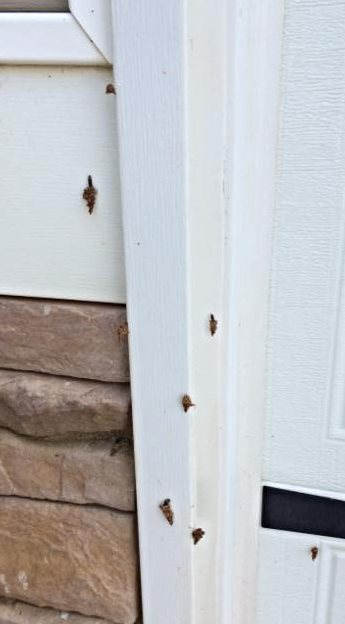
Now that Japanese Beetles are on the way out, Bagworms are already in! A Bagworm is just as it sounds; a worm inside a bag. The newly hatched caterpillar starts out small but goes out with a bang. Mature larvae can reach from 1 to 2 inches inside their bags. Once fully enclosed inside the bag, they can have up to 1000 eggs to devastate the tree for the next year.

How do you know if you have Bagworms?

If you have Leyland Cypress or Arborvitae, then there is a good chance you have Bagworms. Take a look at the needles and see if anything is moving around. If you see a bag that looks like the needles from your tree, then you have a Bagworm. These caterpillars use the needles not only for food, but also to enclose and camouflage themselves. Once the caterpillar is fully grown and has closed the top of the bag, they are hard to control.


The best method of control is to hand pick and manually destroy the bags. If you have tall Leyland Cypress and are unable to reach, or your just don’t want to touch them, then a spray may be needed to control them.

Keep in mind that Bagworms can nest in a variety of places. Below, you see them in on the side of a garage door!

Call us or visit our website to find you local Arborist today!
844-260-0303
www.shrubandtreecare.com